

Process integration to reduce costs and production times
19 March, 2026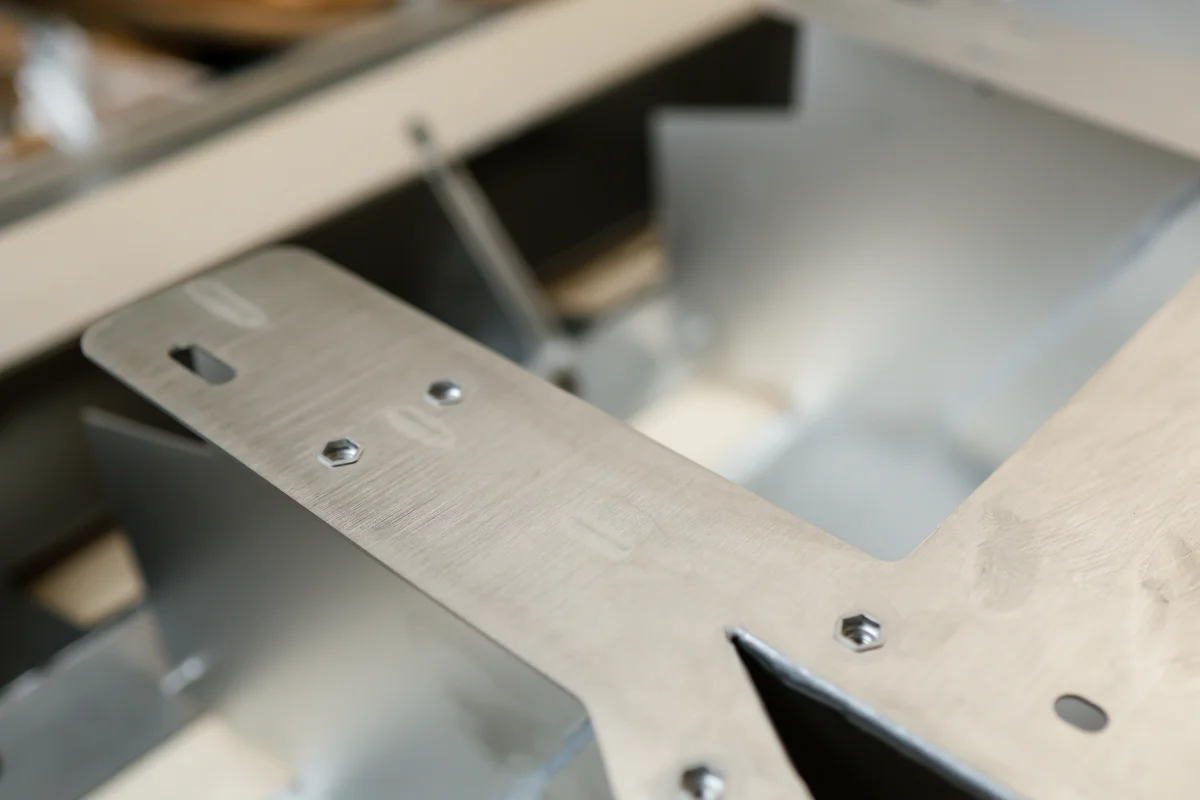
In the production of medium-light metal carpentry components, supply chain management directly impacts delivery times, product quality, and overall project costs.
When processing is distributed among multiple suppliers, each step introduces potential operational issues: intermediate transportation, longer production times, and greater exposure to non-conformities between the different stages of processing.
Relying on a single partner capable of managing multiple processes in a coordinated way makes it possible to simplify the entire production cycle. In an integrated organization, each phase is planned by taking subsequent processes into account, reducing fitting errors between components and improving process continuity.
In the context of metal carpentry, two operations that are particularly critical within this approach are:
Managing these processes in-house makes it possible to deliver a complete semi-finished product, ready for subsequent assembly stages or integration into the final product.
Industrial welding: joint quality and structural continuity
In the metal carpentry production cycle, welding represents a key phase to ensure the structural continuity of components and the stability of the entire structure.
In the FXT welding department, different operating techniques are used to meet the application requirements of various projects. The goal is to achieve precise and reliable joints while maintaining high quality standards, both structurally and aesthetically.
These include:
- manual welding, used for processes that require direct and precise operator control
- robotic solutions, designed to ensure consistency and continuity in high-volume production
- laser welding, used in cases where high-precision joints are required on materials with specific application requirements
The ability to integrate different techniques within the same production cycle makes it possible to handle both complex productions and high production intensity processes while maintaining consistent joint quality.
Attention to welding precision directly contributes to the strength of the final component and compliance with technical project specifications.
Insert assembly: functional integration of the component
Insert assembly represents a key step in the production of many sheet metal or metal carpentry components.
This process involves the insertion and fixing of connection elements within metal structures, ensuring stable structural connections that meet load requirements.
In the FXT production process, various fastening elements are installed, including nuts, threaded inserts, and REM elements.
These components are positioned and secured using dedicated equipment that enables precise process control and significantly reduces assembly errors.
The operation is carried out by qualified technicians, with particular attention to compliance with design specifications, ensuring that each insert is installed in the correct position and within the required tolerances.
The result is a component ready for subsequent assembly stages, with solid and reliable structural connections.
Welding and insert assembly: FXT’s integrated approach to medium-light metal carpentry
In medium-light metal carpentry, collaboration between the technical office and the production department can make a significant difference in the success of a project.
An early-stage discussion on welding processes and insert application often helps identify more efficient production solutions, reducing issues and costs throughout the production cycle.
For this reason, FXT provides its technical department to analyze design requirements and assess process feasibility, helping to optimize component manufacturing from the earliest development stages.
If you are designing metal carpentry components that require welding and insert assembly, contact the FXT technical team to make your production process more efficient and reliable.

Do you want to know more?
Contact us without obligation